
The Alchemy of Espinho: When Stone Turns to Metal
Espinho isn’t a place that tries to impress you with polish. It’s an honest fishing village. When you walk onto the beach, you smell the salt and the diesel from the tractors, and you see the scars of the Arte Xávega tradition everywhere. It’s a hardworking landscape, but if you stay long enough for the sun to start its descent, the entire scene performs a slow-motion magic trick.
I sat there watching the Golden Hour take over, and it wasn't just a change in light—it was a change in the soul of the colors.
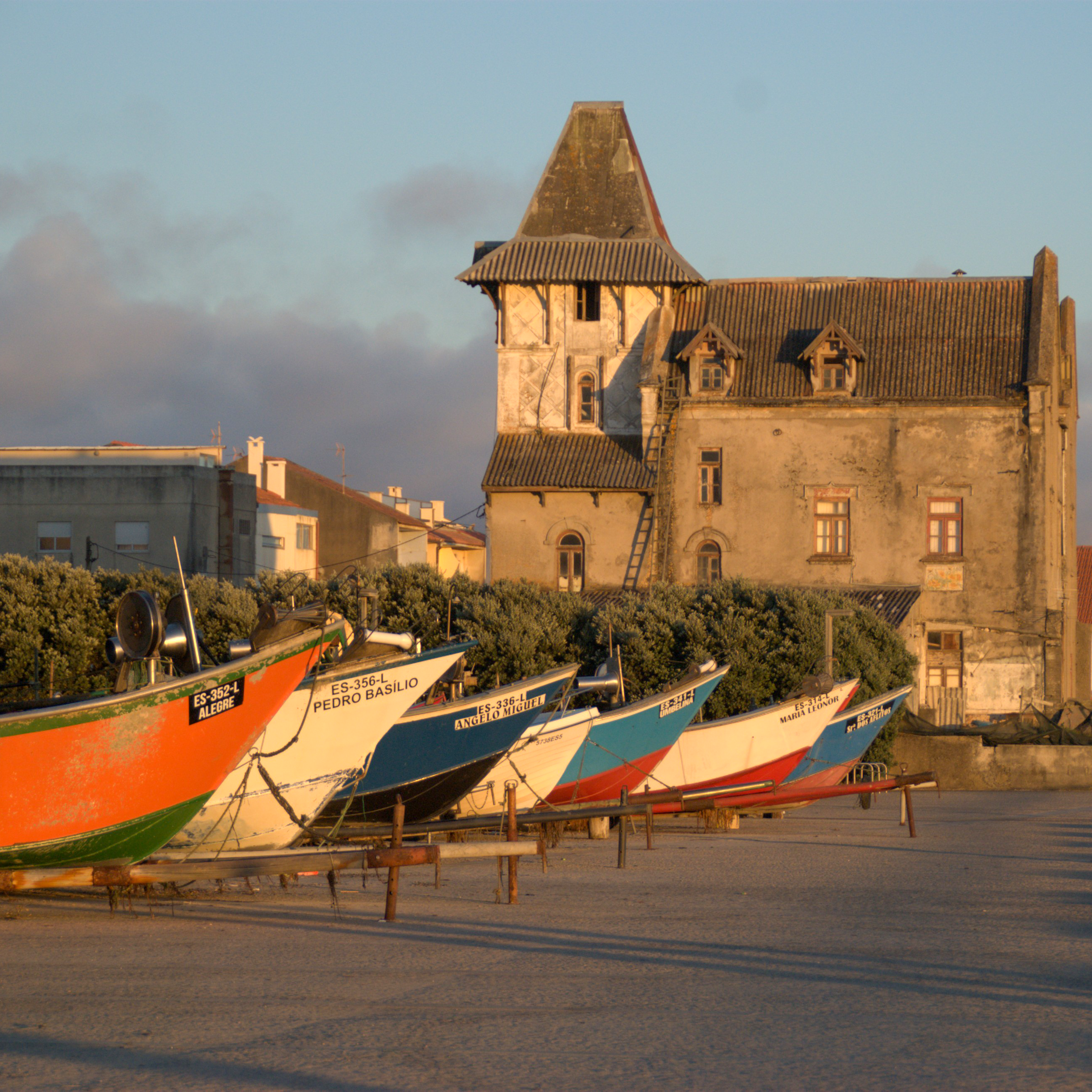
Arte Xávega is a traditional form of artisanal fishing and, at the same time, a powerful cultural and visual expression of Portugal’s Atlantic coast.
In Portuguese, arte does not only mean visual art, but also technique or craft. That’s why Arte Xávega refers to traditional knowledge, passed down from generation to generation.
Today, xávega is also considered cultural heritage.
The Survival of Color
During the day, the fishing boats are loud. They are painted in shouting oranges, vibrant reds, and deep greens. There’s a functional reason for this: survival. Fishermen need to be spotted through the thick Atlantic fog. In the midday sun, these boats are the protagonists of the beach, demanding your attention.
But as the sun drops, they stop shouting. They lose that daytime "protagonism." They become part of the shadow, but their orange hulls still vibrate, holding onto the last bits of heat while the rest of the world begins to cool down.
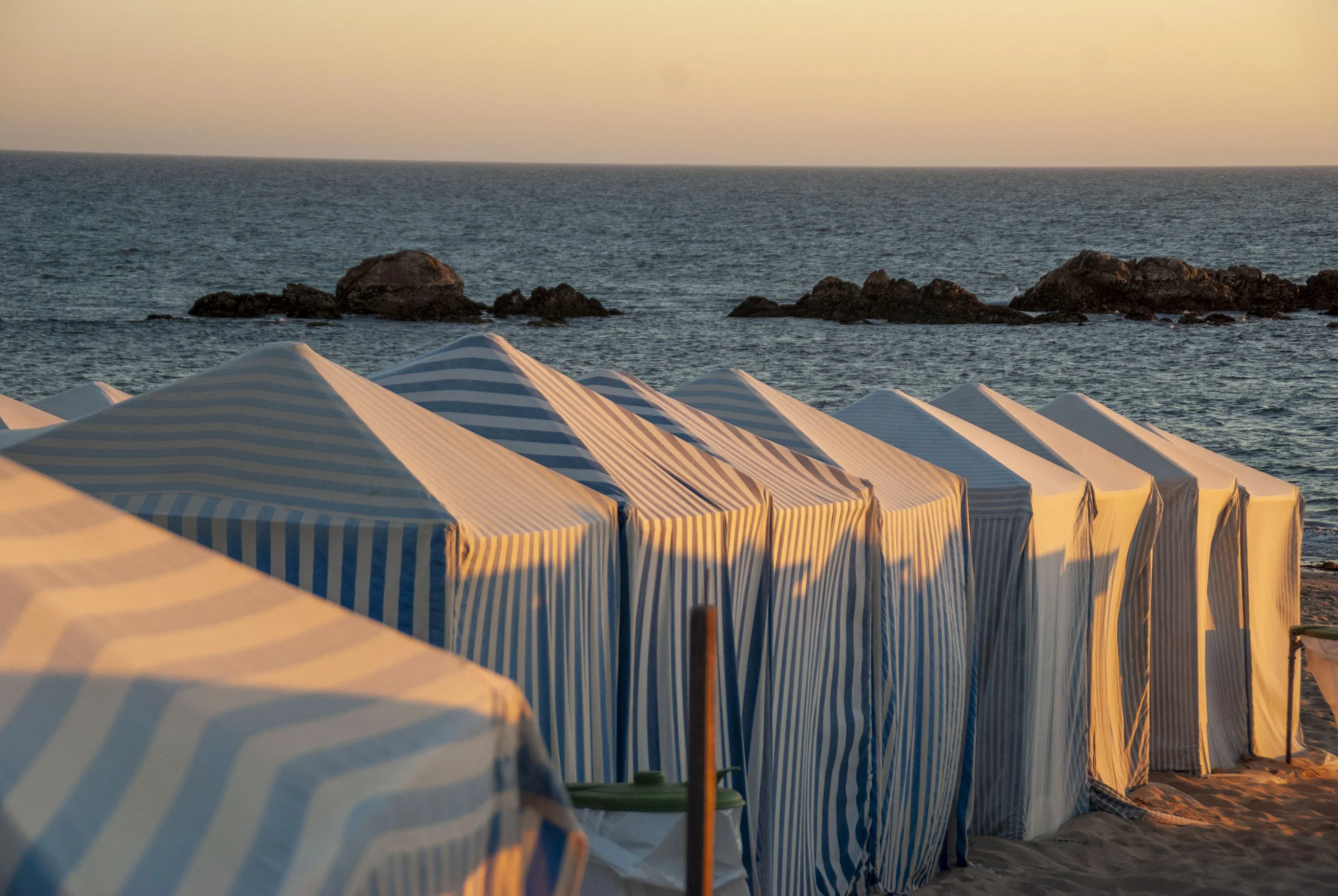
Blue Stripes and Cold Shadows
Then I looked at the "barracas"—those iconic striped beach tents. During the day, they feel playful and summery. But as the "Golden Hour" deepened, something happened to the blue stripes. They turned cold. While the sun was painting the sky in fire, the blue on the canvas turned into an icy, deep navy. It was this incredible contrast: the sand was warm, the sky was burning, but those tents looked like they were already breathing in the night air.
When Stone Becomes Metal
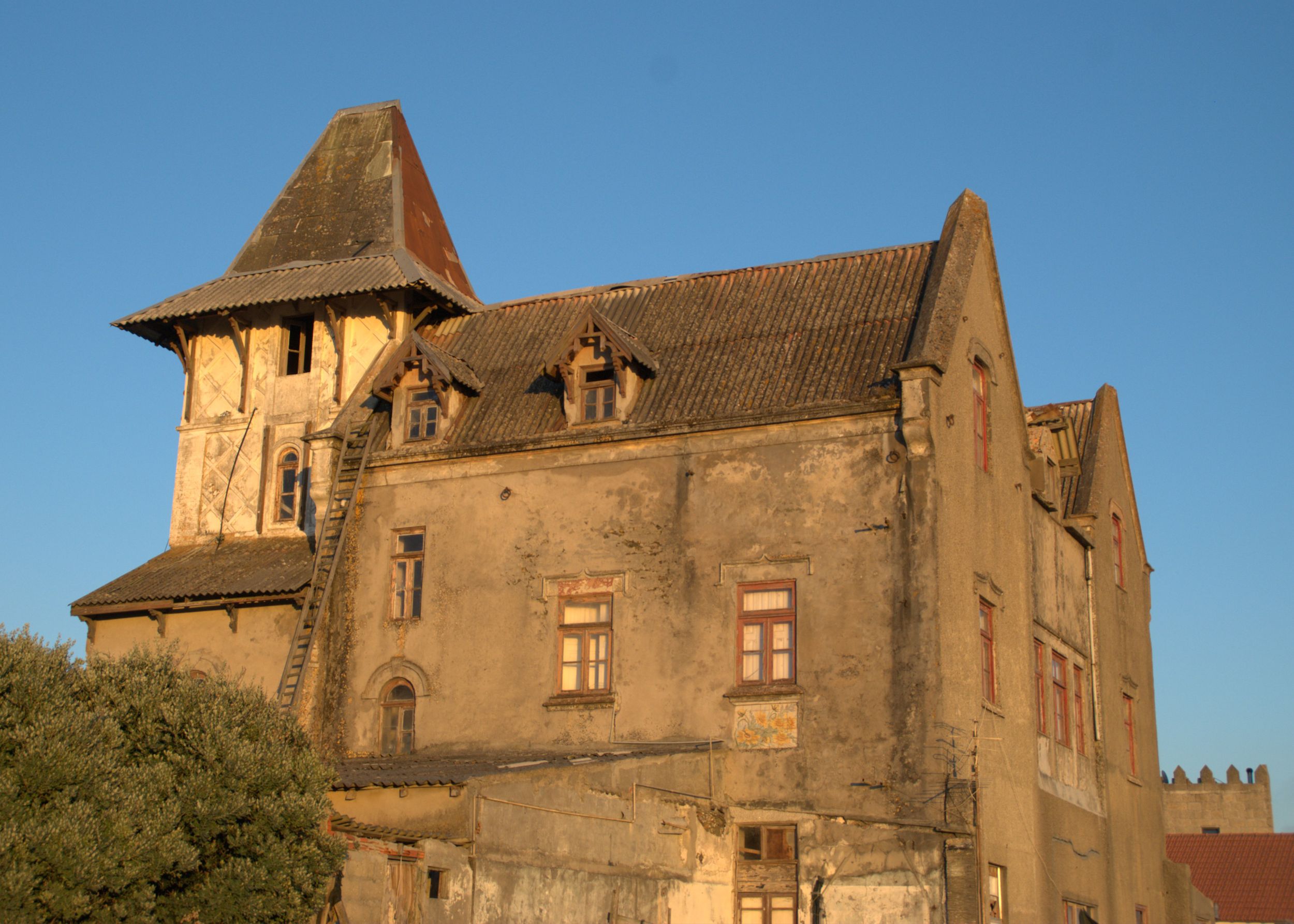
The most haunting part was the old stone building standing guard behind the boats. All day, it’s just a weathered, brown structure. But for about twenty minutes, the "brown" completely vanished.
The light hit the stone at such a sharp angle that it stopped looking like masonry and started looking like heavy metal. It was a metallic metamorphosis. For a moment, I wasn't looking at a building; I was looking at a tower forged in bronze and gold. It had a weight to it that I hadn't noticed before—a shimmer that made me wonder if the stone had been secretly hiding a metallic heart all along.
This is the alchemy of Espinho. It’s the moment where the hardworking grit of a fishing village is gilded in precious metals, just for a few minutes, before the Atlantic swallows the sun.
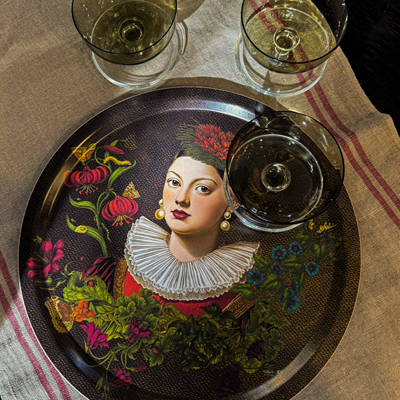
A Piece of the Alchemy at Home
I have this tray, "Filomena - Flower notes," and it has been doing the same trick lately. During the day, the background is a rich, quiet brown—the kind of color that feels grounded and earthy. But when the afternoon light catches it just right, it goes through that same metamorphosis I saw on the coast. That flat brown starts to shimmer like subtle copper or aged bronze.
It’s a reminder that magic isn't just found on a distant beach; sometimes it’s sitting right on your coffee table, waiting for the sun to hit it.
I’m curious—do you have an object or a corner in your home that only reveals its "true" colors during the Golden Hour? Does it turn to gold, or is it more of a deep copper like my Filomena? Tell me about your favorite light-shifting pieces in the comments below.